Post-Semester Check-In

Grades are in the books, and I’ve made it through my third semester in grad school. It was quite a slog, as may be evident by my relative inactivity on the site. Nevertheless, I wanted to check-in with a few thoughts and updates. 

Becoming a Scholar: This semester I took a course on college environments and assessment. The penultimate milestone for my program, it required my colleagues and I to work in teams to plan an original assessment project. Drawing upon our academic foundations in student development theory, diverse college students, and more, our study was titled “An Exploratory Analysis of the School of Informatics, Computing, and Engineering Living and Learning Community.” Working closely with program staff, my group developed this project to explore the gendered dynamics that exist within this STEM LLC. If you’d like to learn a bit more about the project, there are some documents available for download on my current projects/artifacts page.

Aside from the immense relief of accomplishing another semester in my graduate program, this semester was also a significant milestone in my development as a scholar-practitioner. I’ve always been enamored with the idea of being a scholar and producing original research. My time in grad school has propelled me forward in this regard, from learning the scholarly foundations of higher education and student affairs administration to the hours spent wrangling text in Microsoft Word to make sure my work met the necessary APA citation style. In many ways, it felt like this semester fit the final pieces into place. This manifested itself in small wins along the way, such as navigating IRB protocol and feeling comfortable doing a literature review. Within my own group, I worked closely with a colleague and provided most direction regarding research methodologies and data analysis.

I highlight these various items because these aren’t just things I wallowed through for the last semester trying to figure out. These are all components that my graduate program had been preparing me to do the entire time, whether I was cognizant of it or not. I could go on for days, but I’ll keep it short. My program has prepared me to engage in research. I’ve always had these various ideas bouncing around in my head, and I finally feel that I’ve achieved a scholarly foundation where I can go forth and put these ideas out there into the universe of scholarly ideas.

Finishing the IR Certificate: Let me preface this by saying that my decision to pursue the graduate certificate in institutional research is the greatest example I can think of where I made a decision on a whim only for it to become one of the most profound choices I’ve made, in both the personal and academic spheres of my life. Seriously, my internal thought process in pursuing this certificate was a thought process that went something as follows: “I have absolutely no idea what this program is, but it sounds sort of  cool, why not?” I wish I had a more grandiose, epic reason for choosing the IR certificate, but alas, here we are. I had no idea at the time that the program would open up a whole new world of higher education to me. In many ways, the IR certificate confirmed my inner hunch that a career path in assessment and institutional research/effectiveness was the best fit for my professional trajectory. It also helps to be in a graduate preparation program with brilliant faculty. Seriously, how many people can say that their professor is the project director for the Carnegie Classification?

Statistics: I never thought I’d be a huge fan of math, much less statistics for that matter. Naturally, an introductory statistics course is a requirement fore the IR certificate that I talk about above. You can imagine my surprise in discovering that I enjoyed so much that I decided to take multivariate stats as an elective in the spring 2019 semester. Starting to learn stats this past semester was one of the happiest accidents to have happened, as I’m fairly certain I would never have done so were it not required of me. Prior to taking statistics, I would glaze over the methods section of various papers in my field, not really understanding different types of statistical tests or what it means for a result to be statistically significant. I’ve even found myself recently speaking diatribes on why we need more statistical competency in our graduate preparation programs and the field as a whole (but I’ll save that for another day).

Overall, the common theme of this semester was another continuation in my story of becoming — becoming a better scholar and practitioner than I was last semester or even last year. The last semester has taught me a lot about where I fit inside of the large higher education ecosystem, and I’m excited to see where this journey will take me. I’ve got some exciting projects planned for 2019, so I hope you’ll stay tuned!

Thanks for reading,

-Joe
Changing Assistantships: From Living-In to Living-On

If you had asked me a year ago what sort of trajectory I wanted my professional career to take, I would have emphatically said residential life. I had been heavily involved in housing leadership roles and employment opportunities throughout undergrad. In many ways I took a very cliché route by going from hall council to RA to graduate RD. I had the perfect path planned out to a fulfilling career in student housing. For all intents and purposes, I fit the typical “mold” of how many residence life professionals rise up in the field.

Unbeknownst to me as I began my first training session for my live-in assistantship in July 2017, several things would transpire that year that ultimately set me on a very different path from the one I envisioned only a year ago.

The Graduate Certificate in Institutional Research: My decision to pursue the Graduate Certificate in Institutional Research was a complete fluke that turned out to be the second-best choice I’ve made in my academic career (after joining the HESA program at Indiana University, of course). My decision to take the introductory IR course introduced me to a whole new world that opened up within the realm of higher education, a truly exciting world of data sets, analytics, and more. Through the course, I was able to connect with some folks that are doing incredible work with in the field. I always had a strong interest in data and analytics from the few courses I took in computer science as an undergraduate. It felt like the IR certificate program empowered me to discover this magical and alluring field that existed right at the intersection between data and education.

My Summer 2018 Internship Experience: During summer 2018, I interned with University Housing at Florida State University to support the needs of their conduct and assessment program within the Residential Student Experience Team This was such a unique and wonderful position, as it is one of the few ACUHO-I internship experiences that don’t deal with managing a summer school residence hall or a camp operation. My involvement with camps and conferences will always have a special place in my heart, but it was incredibly satisfying to immerse myself in Skyfactor data and to gain an understanding of the role of data and assessment within a residential life unit.

The Chance to Pursue a New Professional Opportunity: I’m incredibly appreciative to the director of my department working with me to create an assistantship experience that would be more congruent with my shifting interests and passion areas within higher education. I saw an opportunity to support my department in a new and exciting way, and we were able to forge my new role. For the next year or two that I hold this position, I hope to demonstrate the value of keeping this assistantship available to support my department’s data and assessment needs.

While I approached my new assistantship with a healthy amount of caution, particularly a fear of the unknown that comes with establishing a new graduate assistantship, I can look back in the last month alone and say that my new assistantship working with residential life assessment has been one of the highlights of my young career as a college student educator.

Just to highlight a few of the things I’ve been able to work in as I approach one month in my role:

Supporting Assessment Initiatives for the Residential Curriculum: Working in a live-on role has given me a bird’s eye view of how my department operates, particularly with regards to the role that our residential curriculum plays in the student experience. Without the additional responsibilities that come with direct supervision of student staff, I am able to commit much more time to thinking about the curriculum and how the work of my supervisor and I help to “tell the story” of what it is that that our residents are learning within their communities.

Cultivating Strong Partnerships with Campus Partners: One of my charges has been to identify and cultivate particular areas of our work that could be prime sites for collaborative efforts. One of the fantastic things about being in an assessment role (particularly at a large institution like IU-Bloomington) is that the data infrastructure of the campus is so incredibly complex, with a variety of units that work together to meet the data needs of the University. Just a few units on campus that I have been able to connect with include: the Center for Learning Analytics and Student Success (CLASS), Bloomington Assessment and Research (BAR), the Center for Innovative Teaching and Learning (CITL), and the Office of the Vice Provost for Undergraduate Education (OVPUE). With each of these campus units I’ve been able to represent the amazing data work taking place within Residential Programs and Services, and to get phenomenal insight into how other data-driven units operate.

All Things Data: It’s no secret that I think data is super fascinating. It allows us to tell the stories of the learning that we facilitate as college student educators and it seldom lies (barring any methodology errors or bias, but I digress). My new role allows me to immerse myself in the data, to generate new data, and to make sense of the data that web obtain.

As I transitioned into my new role, I was worried that I would terribly miss the supervision and student engagement component of my previous role, and I certainly did. The key to assuaging that feeling has been identifying areas or projects where I could provide leadership and apply a similar administrative skillset. While I found that with my residential curriculum assessment initiatives, I was thrilled to be recently tapped to develop and administer the  Thrive@IU program, which seeks to provide access to an IU education while empowering students with professional development and leadership skills. I anticipate a cohort of around 30-40 students, and I can’t wait to meet them in the coming weeks. The program is very near and dear to some high-ranking administrators on my campus and it’s quite exciting (and somewhat nerve-wracking) to know that I have the potential to mold this new program that many administrators are keeping an eye on.

My official title is “Graduate Assistant for Assessment and Special Projects.” I’ll admit, it may sound dry to many of my colleagues. Nevertheless, it truly is the most dynamic role that I’ve held, even compared to my previous assistantship as a traditional in-hall graduate supervisor.

I still have a special love for residence life, and I’ll still likely begin my career as a student housing professional. If there’s anything that my first year of grad school taught me, it’s where my true passions and professional interests lie. That’s something that you can’t put a price on.

At the end of the day, I view myself as a storyteller. I wrestle with data sets, surveys, and whatever else may wander across my desk to tell the story of the dynamic student engagement that takes place in the residential communities at Indiana University-Bloomington. I truly can’t imagine a more worthwhile charge than that.

Thanks for reading,

Joe

WelcomeWeek18
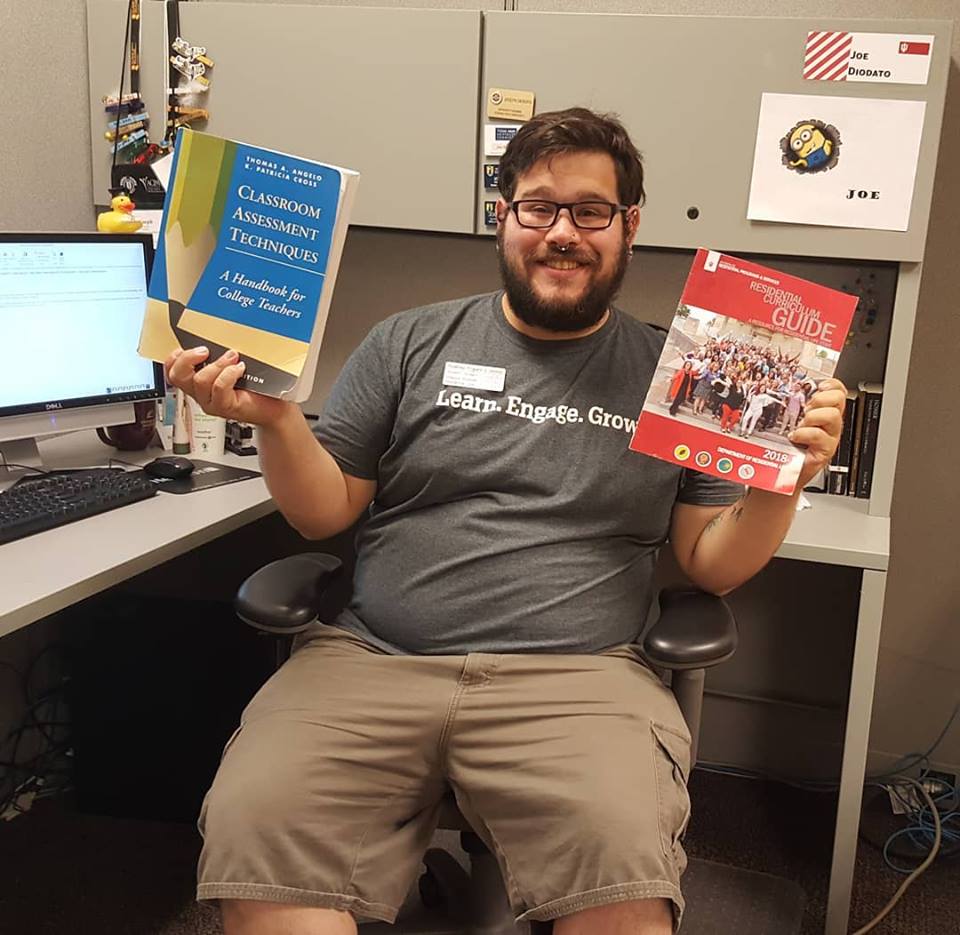
In my office during move-in week, working hard on creating some assessment resources for the department.


Building My Toolkit: Python Pt. 1

Building My Toolkit is a series in which I explore my learning of various tech and data tools in higher education administration. Ultimately, my goal is to use these skills in my role as a student affairs practitioner. Each week, I discuss the progress I’ve made with a particular tool. The series will begin with my exploration of the Python programming language

Very few folks know that I spent a year and a half as a computer science major while I was at UNC-Greensboro. While I did not graduate with a comp sci degree, my coursework provided me with several traits that have stuck around, namely a love of technology and exploring the unknown. Until very recently, I viewed my computing experience as worlds apart from higher education. I would later learn that my programming background could be a tremendous asset in higher education.

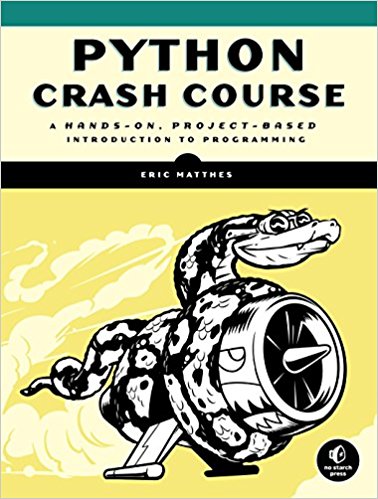
During my first year in the higher education and student affairs program at Indiana University, I took the plunge and enrolled in EDUC-C661: Foundations of Institutional Research. Surrounded by brilliant colleagues, I developed a love and appreciation for the role of data and technology in institutional decision making. With my curiosity piqued by exploring tools such as the Integrated Postsecondary Education Data System (IPEDS) and learning the basics of data visualization in Excel, I began to desire more. I dug out a book on the Python programming book that I had and got to work.

51f48hfhq6l-_sx376_bo1204203200_
Python Crash Course

I love Python Crash Course and the structure of the book. It begins with eleven chapters that introduce the basics of the Python programming language, followed by projects that touch on a variety of areas, including basic game design, data visualization, and web development. Of course, the data visualization features of Python are of the most interest to me at the moment.

 Hello, world! 

Hello world — the first program of many aspiring software developers. This simple script introduces the programming terminal and ensures that the proper dependencies and packages are installed in the programming environment.

I then began to learn the basics of variables and data types, and how they are utilized in a computer program. For example, the below code snippet creates a variable called “message” and stores a sentence in the message. After the string (sentence) is stored in the variable, it is then printed to the terminal.

message = "Python rocks for data analysis!"
print(message)

This could will yield the following output:

 Python rocks for data analysis! 

For the last of this round of exercises, I began to learn about lists. Put simply, a list in computer programming is a collection of things in a specific order. It could be a collection of symbols, letters, numbers, sentences, or anything else. There are many ways to manipulate lists, such as the below example that creates a short list of student development theorists.

theorists = ['Chickering', 'Magolda', 'Perry', 'Kohlberg']

Lists are defined similarly to how we defined the message variable in the second example, except this time we would add brackets to indicate that the items are a list. I can manipulate the lists in various ways, even using an indexing system to refer to certain elements of the list. List indexing in programming starts at zero, so I would refer to element 0 ([0]) to utilize the first element of the above list.

print(theorists[0] + " wrote the seminal text Education and Identity."

This snippet would print in the terminal:

 Chickering wrote the seminal text Education and Identity." 

Overall, I’ve only scratched the surface of what is possible in the Python language. Over time these building blocks will become progressively more complex as my competency in programming continues to develop. I’m excited to continue documenting my learning of the Python language, and I hope that you continue to follow along. Perhaps we may even collaborate on a software project in the near future.

Thanks for reading,

-Joe