As a sort of prequel to my bagpiping journey, I highlight the various events that ultimately set me on a fantastic journey that I never thought I would embark on: learning to play the Great Highland Bagpipes. From my classical music upbringing to my father’s career as a New York City firefighter, this post was a chance for me to reflect on my path as a musician thus far.
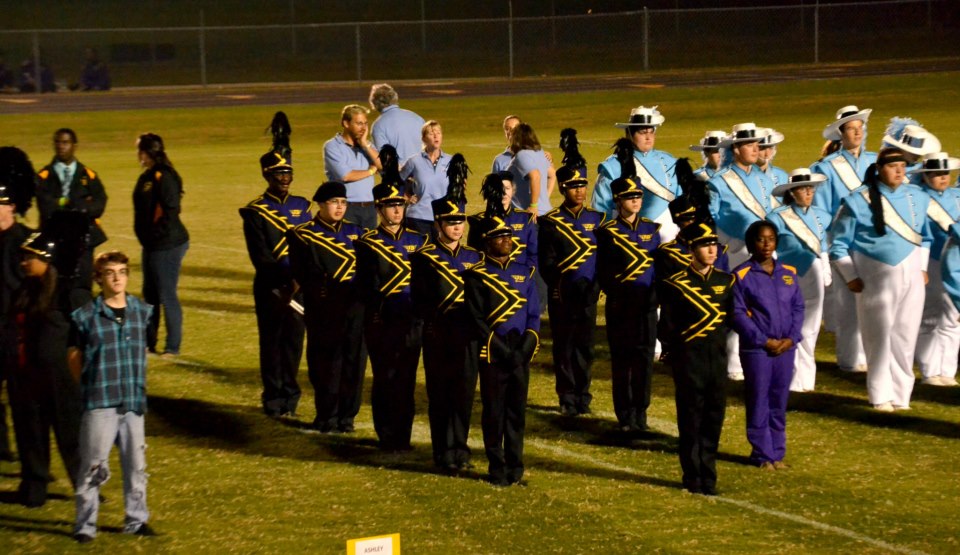
The section leaders from my high school marching band during an awards ceremony (wearing black/purple) circa October 2012. I’m the shorter fellow on the left with the beret.
I’ve been a musician my whole life. Never a professional by any means, but music was nevertheless a significant part of my youth and my identity as a young adult. I spent about 8 years playing violin and tuba, from all-county orchestras to jazz band to national marching band competitions. As poetic as I can be, I don’t think I can do justice to the sheer impact that music had on me, as well as the various music educators who it has been my privilege to learn from. As I embarked on my undergraduate education, music quietly faded into the background. I noodled around with the university pep band and played a few scales on the guitar from time to time, but I just didn’t commit to it like my earlier years.
“I’m learning to play the bagpipes.” is quite possibly the last phrase I ever thought I would utter. My family is certainly not Scottish (Italian, in fact!), and my only remote connection to the bagpipes is that my father is a firefighter in New York City. Over the years I’ve heard the FDNY Emerald Society Pipes and Drums a few times. During my first-year convocation at The University of North Carolina at Greensboro, the Jamestown Pipes and Drums began the ceremony with a lovely rendition of Scotland the Brave. This short performance and my periodic encounters with the Emerald Society marked the beginning of a sort of fascination that I had with the bagpipes. But these groups weren’t quite the catalyst for the start of my piping journey.
As I came back for my second year of graduate school at Indiana University, I felt a sort of gnawing feeling that I had to get back into music. As a tuba player, I had always wanted to play the snare drum in marching band. It turns out that most band directors want their good tuba players to remain on horn — can’t say that I blame them. I discovered the Bloomington Piper’s Society, and I thought it would be a fantastic way to start playing the drums with a proper group.

I joined BPS for a Pub Night, where the group sets up shop at a local bar or restaurant and plays the pipes and various other instruments. I managed to keep up with some of the drum scores, but the pipes are what really caught my attention. For the first time, I was in community with regular folks, having dinner, drinking a beer, and playing on the pipes. Something about that night rekindled my interest in the bagpipes.
Enter: Angus Martin. The BPS president, who is also a fantastic piper and involved in the local community. Not only is Angus a fantastic piper, he has such a passion for the piping community and helping others on their piping joruney. In fact, it’s hard to chat with him and not get excited about piping. I also thought it was pretty neat that we both work at Indiana University, albeit in different departments. Angus has been incredibly kind and supportive, exchanging various Facebook messages on piping basics, recommended tools, books, and more. In fact, I have my first proper lesson with Angus on Monday.
Overall, this post is a prequel outlining the various happenings that accumulated in my decision to properly learn the bagpipes. As I mentioned before, learning the bagpipes is something that I never thought would be on my bucket list. Nevertheless, I’ve begun learning, and am excited for the journey to come.
 Joseph A. Diodato