Building My Toolkit is a series in which I explore my learning of various tech and data tools in higher education administration. Ultimately, my goal is to use these skills in my role as a student affairs practitioner. Each week, I discuss the progress I’ve made with a particular tool. The series will begin with my exploration of the Python programming language.
Very few folks know that I spent a year and a half as a computer science major while I was at UNC-Greensboro. While I did not graduate with a comp sci degree, my coursework provided me with several traits that have stuck around, namely a love of technology and exploring the unknown. Until very recently, I viewed my computing experience as worlds apart from higher education. I would later learn that my programming background could be a tremendous asset in higher education.
During my first year in the higher education and student affairs program at Indiana University, I took the plunge and enrolled in EDUC-C661: Foundations of Institutional Research. Surrounded by brilliant colleagues, I developed a love and appreciation for the role of data and technology in institutional decision making. With my curiosity piqued by exploring tools such as the Integrated Postsecondary Education Data System (IPEDS) and learning the basics of data visualization in Excel, I began to desire more. I dug out a book on the Python programming book that I had and got to work.
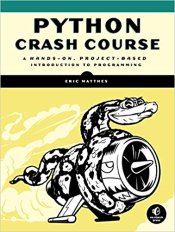
I love Python Crash Course and the structure of the book. It begins with eleven chapters that introduce the basics of the Python programming language, followed by projects that touch on a variety of areas, including basic game design, data visualization, and web development. Of course, the data visualization features of Python are of the most interest to me at the moment.
Hello, world!
Hello world — the first program of many aspiring software developers. This simple script introduces the programming terminal and ensures that the proper dependencies and packages are installed in the programming environment.
I then began to learn the basics of variables and data types, and how they are utilized in a computer program. For example, the below code snippet creates a variable called “message” and stores a sentence in the message. After the string (sentence) is stored in the variable, it is then printed to the terminal.
message = "Python rocks for data analysis!"
print(message)
This could will yield the following output:
Python rocks for data analysis!
For the last of this round of exercises, I began to learn about lists. Put simply, a list in computer programming is a collection of things in a specific order. It could be a collection of symbols, letters, numbers, sentences, or anything else. There are many ways to manipulate lists, such as the below example that creates a short list of student development theorists.
theorists = ['Chickering', 'Magolda', 'Perry', 'Kohlberg']
Lists are defined similarly to how we defined the message variable in the second example, except this time we would add brackets to indicate that the items are a list. I can manipulate the lists in various ways, even using an indexing system to refer to certain elements of the list. List indexing in programming starts at zero, so I would refer to element 0 ([0]) to utilize the first element of the above list.
print(theorists[0] + " wrote the seminal text Education and Identity."
This snippet would print in the terminal:
Chickering wrote the seminal text Education and Identity."
Overall, I’ve only scratched the surface of what is possible in the Python language. Over time these building blocks will become progressively more complex as my competency in programming continues to develop. I’m excited to continue documenting my learning of the Python language, and I hope that you continue to follow along. Perhaps we may even collaborate on a software project in the near future.
Thanks for reading,
-Joe

 Joseph A. Diodato